
| Home | | Myself | | Essays | | Album | | Community | | Our Maula | | Links |
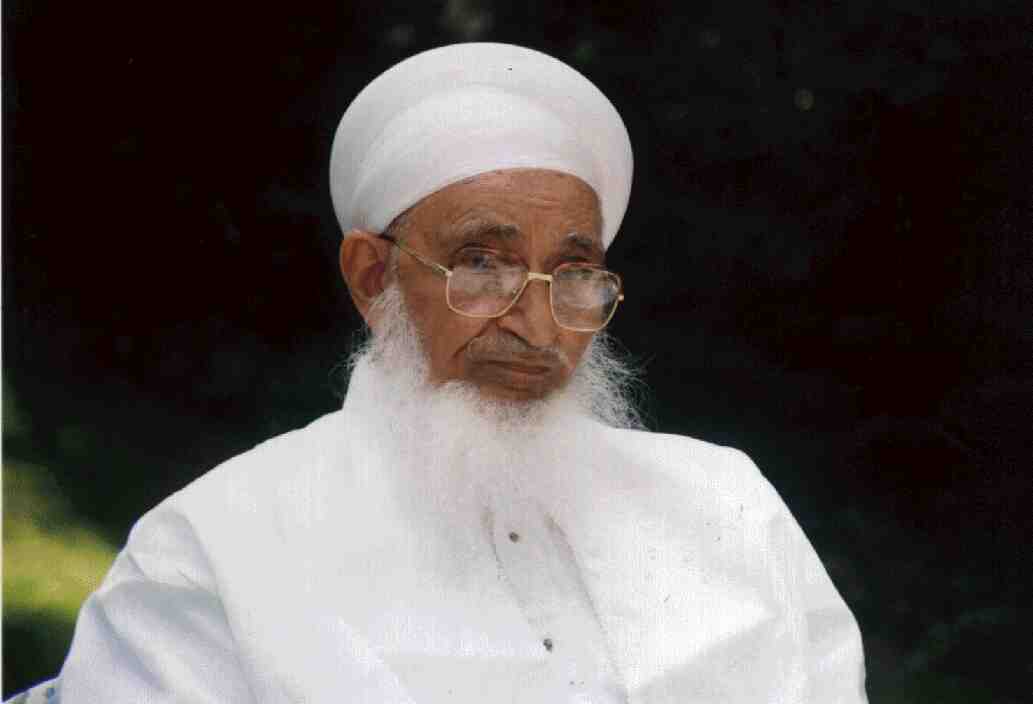
Syedna Mohammad Burhanuddin Saheb (TUS) was born on March 6, 1915 CE (AH 1333). He is the head of the Dawoodi Bohra community, and fifty-second occupant of the office of Dai-mutlaq ("absolute summoner"). The office held by him originated in Yemen in AH 532/1138 CE soon after the twenty-first imam, Imam Al-Tayyib (S.A.), chose seclusion. The Bohra community believes that since then the imamate has continued in seclusion in the progeny of Imam Al-Tayyib (S.A.) and that prior preparations had been made by his predecessors to ensure that the Fatimid mission would continue on behalf of the Imam in seclusion through the Dai-mutlaq. The Da’i thus represents the secluded imam and operates with the imam’s authority. He carries out virtually all the imam’s religious and juridical functions and sustains the social structure of the community of believers.The present Da’i resides in Bombay, the headquarters of the mission having been transferred to India from Yemen in 1539. Like his predecessors, he is greatly revered by his followers. Syedna Burhanuddin (TUS) received his religious and administrative training during the leadership of his renowned father and predecessor, Syedna Tahir Saifuddin (AQ) (1915-1965) who chose him as his successor in 1934. Syedna Mohammad Burhanuddin (TUS) succeeded him in 1965 as the 52nd Dai al-Mutlaq.
In 1930, at the age of 15, he took the misaq, when the Laqab of Burhanuddin, a title given to men of distinction in the Dawat, was bestowed on him.
Two years later he was accorded the honor of Haddiyat. In 1936 his wedding was celebrated in Surat with customary grandeur.
Syedna Mohammad Burhanuddin (TUS) made the historic visit to Yemen, the place intimately associated with the origin of Dai al –Mutlaq’s office and authority. He was the first scion of the Fatemi lineage ever to set foot on the hallowed land in 400 years of history. He not only saw the country but also established a quiet dominion of the heart and mind over the people by providing through his utterances and gestures ennobling glimpses of the Fatemi glory of learning, piety and magnanimity that was once in Yemen and could still be seen embodied in the personality and demeanor of the visiting dignitary.
It was altogether a rewarding voyage in commemoration of which Syedna Burhanuddin came to be hailed as "Mansoor-ul Yemen", a title and honor which was enjoyed by Dai Abil Qasim one thousand years ago.
He has led his community into an era of fresh vibrancy and renewed religious zeal by devoting his efforts to the preservation of their Fatimid heritage in numerous ways.
He has ushered in a spiritual reawakening by requiring his followers to adhere closely to Quranic injunctions in their everyday lives.
He has emphasized adherence to Islamic business ethics that include the prohibition of interest and institutionalized interest-free loan schemes to cater for the community’s borrowing needs.
He has strengthened the practice of lamenting the martyrdom of Imam al-Husain (S.A.); the annual gatherings to mourn the martyrdom during the first ten days of Muharram (‘Ashura’) has become the major spiritual expression of the community, with thousands of Bohras attending the sermons of the Da'i, which are relayed live to Bohra centers all over the world.
He has promoted the blending of secular and religious studies by initiating Islam-oriented schools which attempt to provide an integrated education in an Islamic atmosphere.
Finally, he has undertaken the restoration of Fatimid relics and promoted Fatimid architecture and design in the construction of a large number of mosques, mausoleums, and other public buildings all over the world. The most important of such works has been the monumental restoration in 1980 of al-Jami-ul-Anwar, the huge mosque built by the Fatimid caliph-imam al-Hakim (996-1021).
Syedna Burhanuddin (TUS) is an accomplished scholar. He personally supervises the curriculum of the Arabic academy al-Jamia al-Sayfiyah where his followers receive religious training. He is the author of several books on religious thought and has composed thousands of verses in Arabic on supplication and in praise of the Prophet, imams and da’is. He has received honorary doctorates from al-Azhar University (1966) and from Aligarh Muslim University (1966). He has frequently visited Dawoodi Bohra centers all over the world to personally imbibe Islamic values in his followers, a practice he has continued even at an advanced age. He spends many hours each day in attending to the needs of the Daudi Bohras, who seek his advice on all aspects of life, even on mundane matters such as the choice of name of a newborn. His charitable endeavors, promotion of institutes and trusts for educational and economic welfare, support of projects on environmental issues and renovation activities have earned him international recognition, including the highest civilian honors of Egypt (1976) and Jordan (1981).